The idiots try everything to keep their ever decaying narrative.
When you understand the fourth phase of water (EZ water) then you will realize that the heart is a control valve (in my opinion). Check this link Jerry Pollack website.
The following information was taken from this website: Heart
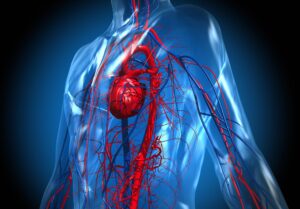
Contrary to the official theory, findings from embryology and other sources have shown that the heart is not a mechanical pump pushing blood through the blood vessels but that the blood is instead propelled by its own biological force boosted by the heart. In Nature, fluids move in a spiral manner. It has therefore been suggested that the structure of the cardiovascular system is taking full advantage of this natural tendency of fluids to spiral.
The rotary motion of the heart and blood was detected and measured by several researchers:
As early as 1908, James B. Pettigrew, Professor of Medicine at St. Andrews University (Scotland), performed dissections of the heart and discovered that the heart muscle has seven muscle layers. Pettigrew postulated that one group of muscles contracts during systole while the other stores energy that is utilized in diastole. In his view, the motion of the heart muscle is like that of a torsional (twisting) pendulum (Design in Nature, 1908).
In the 1920s, scientist and philosopher Rudolf Steiner taught his medical students that the spiral flow in the blood vessels of the embryo was propelled by its own biological momentum initiated in the tubes that eventually become the heart. The heart is only aiding this process. In Psychoanalysis and Spiritual Psychology Steiner states: “The pressure is not the cause of the blood flow but the result of it.”
In 1932, Harvard University scientist J. Bremer filmed the blood flow in embryos before the formation of the heart valves. He observed that the spiraling blood is boosted by the pulsating heart without creating turbulence in the blood. He described two streams in the heart tubes that spiral with different forward velocities around their own longitudinal axes and around each other (“Presence and influence of spiral streams in the heart of the chick embryo”, American Journal of Anatomy, 49: 409-440). Bremer’s findings were confirmed in 1981 by the surgical studies of A. Arbulu and I. Asfaw: “Not only is the blood flow well maintained in the embryo before the formation of the valves; there are reports of adults in whom both infected tricuspid and pulmonary valves were surgically removed and not replaced by prosthetic valves, without significant problems.”
The Austrian researcher Viktor Schauberger (1885-1958), celebrated for his extraordinary discoveries of the energy effects of water, stated on many occasions that the heart was not a pump but that the function of the heart was rather that of a regulator of the blood flow. He saw the peristaltic and pulsatory action of the blood vessels as the elements responsible for the blood’s circulation. According to Professor Kurt Bergel (ca. 1925-30) of Berlin University, this function was carried out by the millions of highly active capillaries permeating the body. Bergel had detected this pulsation by observing the small blood vessels that formed around the yolk-sac of a bird’s egg. Upon opening the egg, he noticed that blood vessels surrounding the yolk-sac pulsated before they cooled off, although the heart had not yet been formed.
Ralph Marinelli of Temple University in Philadelphia wrote: “When the heart begins to function, it enhances the blood’s momentum with spiraling impulses. The arteries serve a subsidiary mimical heart function by providing spiraling boosts to the circulating blood. In so doing the arteries dilate to receive the incoming blood and contract to deliver an impulse to increase the blood’s momentum” (The Heart is not a Pump, 1995).
The spiral theme is apparent in the function and form of the heart and blood vessel: “The spiral shape on the inner surface of the blood vessels, the temperature differential between core and extremities, and the electromagnetic charge differential between arterial (oxygen-rich) and venous (CO2-rich) blood also seem to support circulatory action” (Viktor Schauberger). “The musculature of the heart and arteries all the way down to the pre-capillaries is spirally oriented, and both the heart and arteries move spirally to augment the momenta of the blood” (Stonebridge and Brophy, 1991). “The heart moves the way it does because of its bundles of striated muscle fibers, which are oriented spirally in the same direction and work together to effect motion … in 3D, healthy hearts do their own version of twist. Rather than a simple pumping action, they circulate blood as if they were wringing a towel” (Harvard School of Engineering and Applied Sciences, February 24, 2014).
Modern analysis of the heart has shown that the amount of pressure actually required to force the blood through the entire length of the body’s blood vessels would have to be able to lift a one hundred pound weight one mile high. Given that the human body contains at least 60,000 miles (96,500 km) of blood vessels, it is inconceivable that the heart would be capable of producing sufficient power needed to circulate the blood (Ernst O. Attinger, Hydrodynamics of Blood Flow, Univ. Virginia Med. Center, Charlottesville, VA).
Sources: “The Heart is not a Pump. A Refutation of the Pressure Propulsion Premise of Heart Function” by R. Marinelli et al. (Semantic Scholar, 1995) and “Living Energies, Viktor Schauberger’s Brilliant Work with Natural Energy Explained” by Callum Coats, 1995
Recommended video: The Heart May Not be a Pump: Thomas Cowan, MD, on Cardiovascular Disease